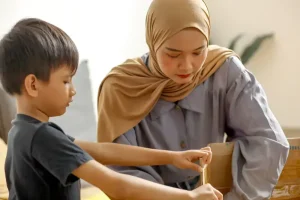
A mom can help her son develop healthy emotional regulation and empathy by teaching him to recognize feelings, express them safely, understand other people’s perspectives, and solve problems calmly. She can build these abilities through everyday conversations, patient guidance, clear boundaries, and by modeling respectful behavior. These skills develop over time, so consistent support matters more than expecting a child to handle every emotion perfectly.
A boy who learns that sadness, anger, fear, and disappointment are normal emotions is better prepared to manage them without shame. When his mother also helps him notice how others feel, he begins to understand that emotional strength includes kindness, respect, and consideration.
Why Are Emotional Regulation and Empathy Important for Boys?
Emotional regulation helps a boy understand what he feels and choose how to respond. Empathy helps him recognize that other people have feelings, needs, and experiences that may differ from his own. Together, these skills support friendships, family relationships, classroom behavior, and confidence.
A boy who cannot explain his frustration may shout, withdraw, or become physically aggressive. A boy who has learned to recognize frustration can say, “I’m upset because I wanted more time to play.” That small change gives him a healthier way to communicate and makes it easier to find a solution.
Emotional skills are not signs of weakness. Boys need opportunities to express sadness, fear, affection, disappointment, and excitement without being judged. When a mom helps son emotional skills develop in a supportive environment, she teaches him that being strong also means understanding himself and respecting others.
How Do Emotional Skills Support Healthy Development?
Children who can manage strong feelings often find it easier to focus, communicate, and work through disagreements. They can pause before reacting, explain what they need, and consider different solutions. These abilities are useful at home, at school, and later in adult relationships.
Empathy also helps boys build meaningful friendships. They begin to notice when someone feels left out, understand why an apology matters, and recognize when their actions have hurt another person. The American Academy of Pediatrics identifies emotional understanding, empathy, respect, and acceptance as important parts of healthy mental and emotional development.
Why Should Mothers Avoid Gender-Based Emotion Rules?
Some boys hear messages such as “boys don’t cry” or “be tough.” Although these comments may be intended to encourage confidence, they can make children feel embarrassed about normal emotions. A boy may learn to hide sadness rather than understand it, or express fear through anger because he does not know how to discuss it.
A healthier message is that every emotion is acceptable, but not every behavior is. Your son can feel angry without hitting, feel disappointed without insulting someone, and feel nervous while still trying something new. This distinction gives him permission to be honest while keeping expectations clear.
How Can a Mom Teach Her Son to Recognize and Name Feelings?
A child cannot manage an emotion effectively if he does not know what he is experiencing. One of the simplest ways a mom helps son emotional skills grow is by teaching him the words for different feelings. Start with familiar emotions such as happiness, sadness, anger, fear, and excitement. Gradually introduce more specific words, including jealousy, embarrassment, loneliness, frustration, and disappointment.
Use ordinary moments to introduce emotional vocabulary. If your son loses a game, you might say, “You look disappointed because you wanted to win.” If he is excited about visiting a friend, explain that excitement can make the body feel energetic. These conversations help him connect feelings with situations and physical reactions.
What Questions Help Boys Talk About Their Feelings?
Open-ended questions encourage children to explain what is happening instead of answering only yes or no. Try asking, “What was the hardest part of your day?” or “How did you feel when that happened?” If he struggles to answer, offer a few possibilities without forcing him to choose one.
You can also talk about feelings while reading stories, watching age-appropriate films, or discussing everyday events. Ask what a character might be feeling and why. This gives your son a chance to practice recognizing emotions without feeling that every conversation is about his own behavior.
The American Psychological Association recommends teaching children to identify emotions and discussing coping strategies when they are calm. Children develop these abilities at different rates, so regular, low-pressure conversations are more helpful than expecting immediate results.
How Can a Mom Model Healthy Emotional Regulation?
Children learn a great deal by watching how adults respond to stress. If a mother handles frustration by shouting, blaming, or withdrawing, her son may copy those reactions. If she pauses, explains her feelings, and responds respectfully, he sees what emotional regulation looks like in real life.
Modeling does not mean pretending to be happy all the time. You can say, “I’m feeling frustrated because I have a lot to finish. I’m going to take a few slow breaths before I continue.” This shows your son that adults experience difficult emotions too, and that they can manage them without taking those feelings out on others.
What Should a Mom Do When She Feels Angry?
If you notice yourself becoming overwhelmed, pause before responding whenever it is safe to do so. Take a few breaths, lower your voice, or step away briefly if your child is safe and another adult is available when needed. Return to the conversation once you feel more settled.
If you raise your voice, acknowledge it rather than ignoring what happened. You might say, “I was frustrated, but shouting was not the right way to speak to you. I’m sorry.” This teaches accountability and shows that relationships can recover after difficult moments.
How Can Daily Conversations Teach Self-Control?
Talk about your own decisions in simple language. For example, explain that you felt annoyed when traffic delayed you, but chose to listen to music instead of becoming angry at other drivers. Your son begins to see that feelings and actions are connected, but they are not the same thing.
A mom helps son emotional skills become stronger when she gives him chances to practice these responses. Praise specific efforts, such as waiting before speaking, asking for help, or using words instead of shouting. Focus on progress rather than demanding perfect behavior.
How Can a Mom Help Her Son Develop Empathy?
Empathy develops when children learn to notice other people’s feelings and consider what might be causing them. A mother can teach this by discussing everyday situations, listening to her son’s observations, and showing kindness in her own interactions.
For example, if your son sees a classmate sitting alone, ask what the child might be feeling. He may say the classmate is bored, shy, or sad. You can then discuss a simple way to help, such as inviting the child to join a game. The goal is not to make your son responsible for everyone’s happiness. It is to help him become aware of other people.
Books, stories, and films can also create useful conversations. Ask questions such as, “Why do you think that character reacted that way?” or “What could someone do to make the situation better?” Discussing different perspectives helps boys understand that people can experience the same event in different ways.
Encourage caring actions without turning them into forced performances. Your son might help a sibling, share something with a friend, or check on someone who is upset. Notice these actions and explain why they matter. The American Academy of Pediatrics recommends helping children understand different viewpoints and treating people with kindness regardless of their differences.
A mom helps son emotional skills develop further when she teaches him to listen before judging. If he says a friend is being difficult, ask what might have happened from the friend’s perspective. This encourages curiosity rather than quick criticism.
How Can Clear Boundaries Teach Respect and Emotional Responsibility?
Understanding emotions does not mean allowing every reaction. Your son needs to know that anger, jealousy, and disappointment are normal, but hurting others or damaging property is not acceptable. Clear boundaries help him understand how to express difficult feelings while respecting the safety and dignity of others.
Use calm, direct language when correcting behavior. Instead of saying, “You’re a bad boy for hitting your brother,” try, “I know you were angry, but hitting hurts. You can tell him you are upset, or ask me for help.” This separates the child from the behavior and gives him an alternative to practice.
Consequences should be connected to the situation whenever possible. If he breaks something during an argument, involve him in an age-appropriate effort to repair or replace it. If he hurts someone’s feelings, guide him through a meaningful apology and discuss what he could do differently next time.
A sincere apology involves more than saying the words. Help him recognize what happened, understand its effect, and take responsibility. Avoid forcing an immediate apology while he is still overwhelmed. First help him calm down, then return to the conversation when he can think clearly.
The aim is to combine warmth with consistent expectations. Research-based parenting guidance emphasizes listening, teaching, appropriate boundaries, positive attention, and modeling respectful behavior.
What Daily Activities Help Boys Practice Emotional Skills?
Emotional development does not require a special lesson every day. Ordinary family activities can give your son regular opportunities to communicate, cooperate, solve problems, and understand other people. A mom helps son emotional skills grow when she makes these small learning moments part of family life.
Shared play is a useful starting point. Board games, sports, building projects, and imaginative games involve taking turns, following rules, handling disappointment, and working with others. When your son loses a game, help him notice his frustration and choose a respectful response. When he wins, remind him to celebrate without making others feel small.
Family conversations can become another simple habit. During dinner or a quiet moment before bed, invite everyone to share one good experience and one challenging experience from the day. Listen without immediately correcting or solving every problem. Sometimes your son needs understanding before he is ready for advice.
Give him age-appropriate responsibilities, too. Helping prepare a meal, caring for a pet, or assisting a younger sibling can encourage patience and consideration. Explain how his actions affect other people and recognize his effort when he follows through.
Reading together is another practical way to build emotional awareness. Choose stories with characters who face conflict, disappointment, friendship problems, or difficult choices. Discuss what the characters could have done differently and whether more than one response might be reasonable.
A mom helps son emotional skills develop through repetition, not one perfect conversation. Keep activities relaxed and enjoyable. If your son does not want to talk at a particular moment, try again later rather than turning every activity into a lesson.
Conclusion
Helping a boy develop emotional regulation and empathy begins with everyday support. Teach him to name his feelings, show him how to manage frustration, listen to his concerns, and encourage him to consider other people’s experiences. Pair this understanding with clear boundaries so he knows that emotions are acceptable while harmful behavior is not.
A mom helps son emotional skills grow by being a steady example of patience, kindness, honesty, and responsibility. Progress may look different at every age, and difficult days are part of learning. With consistent guidance and a trusting relationship, your son can become more confident in expressing himself, managing challenges, and treating others with care.
FAQs
1. How can I teach my son to control his anger?
Help him recognize early signs of anger, such as tense muscles or a louder voice. Teach slow breathing, taking a short break, and using words to explain the problem. Practice these strategies when he is calm.
2. How can a mother raise an emotionally intelligent boy?
Encourage honest conversations about feelings, model respectful communication, and help him understand other people’s perspectives. Give him opportunities to solve problems and praise thoughtful actions rather than expecting him to hide difficult emotions.
3. At what age should boys learn emotional regulation?
Emotional learning starts in early childhood and continues through adolescence. Young children need adult support to calm down, while older children can gradually practice more independent coping and problem-solving skills.
4. How do I teach my son to be more empathetic?
Talk about how other people might feel in everyday situations. Read stories, discuss friendships, encourage helpful actions, and model kindness. Let him ask questions and learn that different people can have different experiences.
5. What should I do if my son refuses to talk about his feelings?
Avoid forcing a conversation or criticizing him for staying quiet. Try talking during a walk, car ride, or shared activity. Ask gentle questions, listen without judgment, and let him know you are available whenever he feels ready.